

Moving to Vacaville, CA
The Complete 2026 Relocation Guide
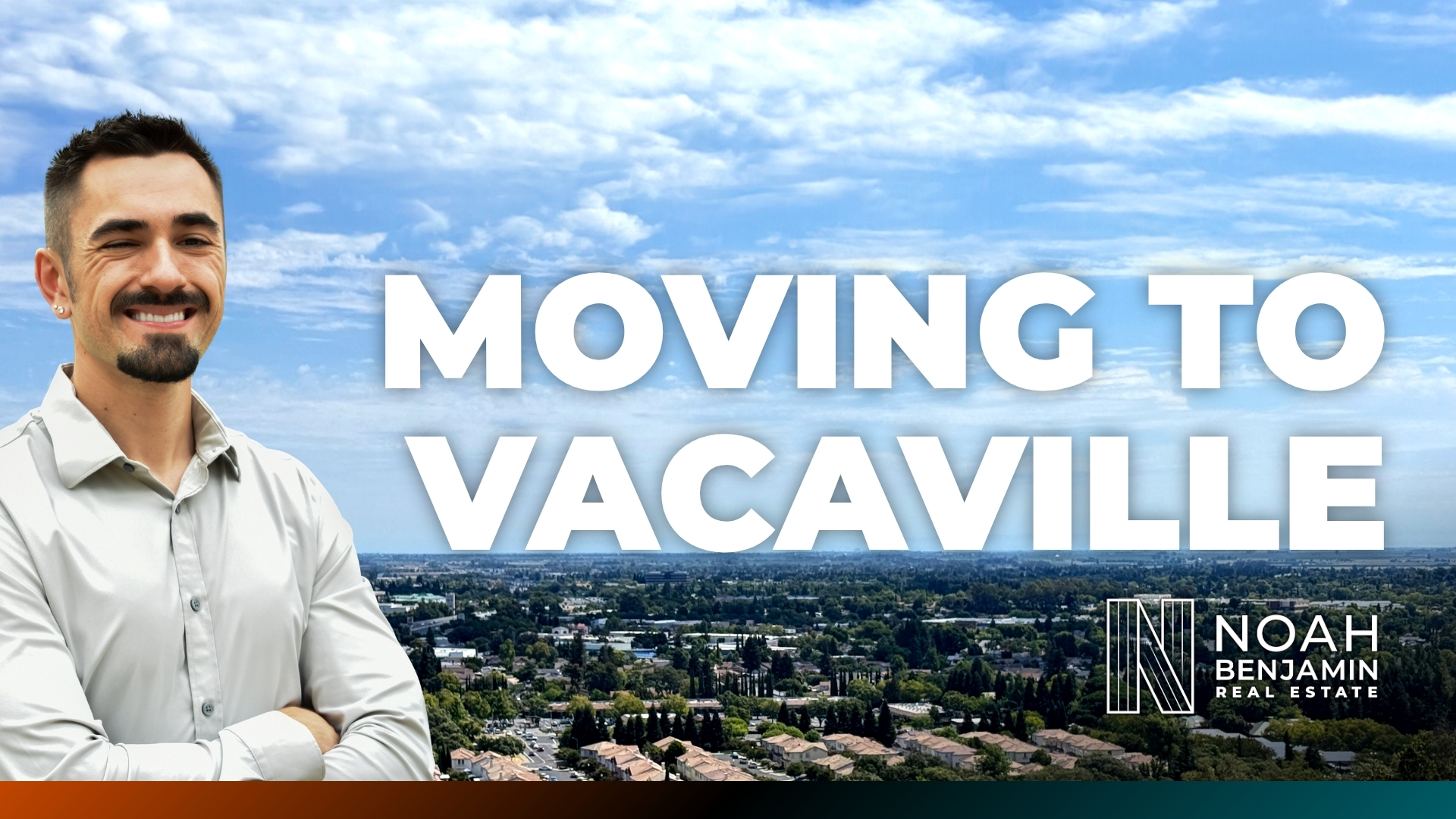
If you're considering a move to Vacaville, California, you're in good company. Every week, buyers relocating from the Bay Area, Sacramento, and out of state reach out with the same questions: What does it cost to live here? Which neighborhoods are best? What's the commute really like? This guide answers all of it, based on what buyers actually need to know before making the move.
Where Is Vacaville, and Why Are People Moving Here?
Vacaville is located in Solano County, positioned almost perfectly between Sacramento and the Bay Area — roughly a 45-minute drive to Sacramento and about an hour to an hour and 20 minutes to San Francisco, depending on traffic and destination.
The majority of relocation buyers come from the Bay Area — San Francisco, Oakland, Concord, and the South Bay — drawn primarily by affordability. Vacaville offers single-family homes with yards, garages, and home offices at a fraction of Bay Area prices, while still keeping commuting distance reasonable for hybrid or occasional in-office work.
The city also has strong local employment drivers, including:
- Travis Air Force Base, which brings a steady stream of military relocation buyers
- Healthcare employers like Kaiser Permanente and NorthBay Healthcare
- Biotech and life sciences companies in the surrounding corridor
Cost of Living in Vacaville
Cost is usually the deciding factor for relocation buyers, so let's break it down.
Home prices: Vacaville's median home price is significantly lower than comparable Bay Area markets — buyers coming from San Francisco or the Peninsula can often expect to pay 40–60% less for a similar or larger home.
Property taxes: California property taxes are based on purchase price, generally landing around 1.1–1.25% annually, with variation depending on the neighborhood and any special assessments (Mello-Roos, for example, in some newer developments).
Utilities: Vacaville summers are hot, with regular days in the 95–100°F+ range from June through September. Budget for higher electric bills during those months if the home relies on central air conditioning.
HOA fees: These vary widely by neighborhood. Some communities have no HOA at all, while newer developments with shared parks, pools, or landscaping may carry monthly fees.
Overall, day-to-day expenses — groceries, gas, services — also tend to run lower than in the Bay Area, though prices have risen across California in recent years.
What Are the Neighborhoods Like?
Vacaville has distinct neighborhoods, each suited to different lifestyles and priorities:
- Alamo Creek — Newer construction with a strong family-friendly reputation and proximity to some of the area's top-rated schools. Popular with young families and move-up buyers.
- Browns Valley — One of Vacaville's most established neighborhoods, known for mature landscaping, strong schools, and convenient freeway access.
- Downtown Vacaville — Walkable streets, local shops and restaurants, and small-town charm. A good fit for buyers who value character over new construction.
- Northeast Vacaville — Newer developments with larger lots in some areas and generally more budget-friendly pricing.
(Looking for a deeper dive? Check out our full neighborhood guides for Alamo Creek, Browns Valley, and more.)
What's the Commute Really Like?
Commute time is one of the most common concerns for relocation buyers, so here's the honest breakdown:
- To San Francisco: Approximately 1 to 1.5 hours by car, depending on traffic and destination. Some commuters combine driving with the Capitol Corridor train via the Vacaville Transportation Center, or use casual carpool options.
- To Sacramento: Roughly 40–50 minutes.
It's worth noting that hybrid work arrangements have changed the calculus for a lot of buyers. A commute of an hour-plus feels very different when it's two or three days a week rather than five — and many families find that tradeoff well worth the additional space and affordability.
Schools in Vacaville
Vacaville is primarily served by Vacaville Unified School District, though school quality and ratings vary meaningfully by neighborhood — one of the biggest reasons buyers choose one part of town over another.
Neighborhoods like Alamo Creek and portions of Browns Valley feed into some of the district's higher-rated schools. If schools are a top priority, it's worth researching specific attendance boundaries carefully, since they can be more nuanced than expected and can also influence long-term resale value.
What Buyers Wish They Knew Before Moving to Vacaville
A few honest, practical notes for anyone considering the move:
- Summers are hot. Expect regular days above 95°F in July and August — a real adjustment for anyone coming from coastal fog.
- It's a small-town feel. Vacaville has grown, but it isn't a big-city environment. For many relocating from urban areas, that's exactly the appeal — but it's worth knowing going in.
- New construction is common in certain neighborhoods. If a mature, established street is a priority, be specific about which part of town you target.
- Good homes move quickly. Well-priced properties in desirable neighborhoods don't stay on the market long. Buyers relocating from out of the area should have financing and an agent lined up before touring, not after.
Is Vacaville the Right Fit for You?
Vacaville offers a compelling combination for relocation buyers: meaningful affordability compared to the Bay Area, reasonable proximity to both Sacramento and San Francisco, strong schools in the right neighborhoods, and a genuine sense of community. The tradeoffs — hot summers and a commute for those working outside the area — are ones most relocating families weigh in and decide are well worth it.
If you're seriously considering a move to Vacaville, the best next step is to get a clearer picture of which neighborhood fits your lifestyle and budget, and to understand the buying process as an out-of-area buyer.
Ready to explore your options? Reach out today for a no-pressure conversation about your move, or download our free Vacaville Relocation Guide for a deeper breakdown of costs, neighborhoods, and the step-by-step buying process for relocation buyers.


